Concrete block walls in Allentown PA - a solid wall built to keep rain out
Need a garden, garage or retaining wall, or an old one rebuilt? We build block walls with the joints, base and timing planned first.
What does it take to build a concrete block wall in Allentown?
A concrete block wall is built from concrete blocks, usually laid in mortar and often reinforced inside so it carries its load better. At Brickline Allentown Concrete and Masonry, we build these walls in Allentown, PA for yards, garages and slopes, so they hold their shape and keep weather out.
Most block wall calls I get are for a garden wall, a garage or shed wall, or an old wall that's cracked or leaning and needs rebuilding. If the wall's main job is holding back a slope, our retaining wall construction page covers that side of the work too.
The price turns on the wall's length and height, whether it's mortared or dry-stacked, how much reinforcement and grout it needs, whether it holds back soil, and how easy it is to dig and get block to the spot. The schedule mostly turns on weather and the permit check, because cold months mean extra protection for new block. We're fully licensed and insured, and we settle the permit question with the city before anyone starts digging. Your estimate puts the scope in writing, so you can see exactly what your wall involves.
- We build garden and yard walls, garage and shed walls, and block bases for steps and counters.
- For walls holding back soil, one block maker's guide says keeping that soil from getting soaked is essential.
- Your estimate names which block cores, the open centers of each block, get filled with grout for strength.
What happens when you call us about a block wall?
I handle the first visit myself and work alongside our small crew on the build, so the person who explained your wall is the one there when it goes up. Here's how it runs.
Call or send us a message
Tell us roughly how long and tall the wall is and what it's for, and send a few photos if you can. We'll set up a time for me to come out.
Walk the site together
I look at the ground and where the wall goes, show you what I'm seeing and explain your options before I write anything up. The estimate puts the scope in writing, so you know what the price covers before you decide and can line it up against any other bid.
Check permits, then build
Once you're ready, we check with the local office about a permit, then our crew digs, sets the base and lays the block with me working alongside. If it's cold out, the protection we planned goes on the new block.
Walk the finished wall
Before we pack up, we walk the finished wall with you and go over anything you want a closer look at. We clean up the site and haul off what we brought.
Block and stone walls the way masons build them
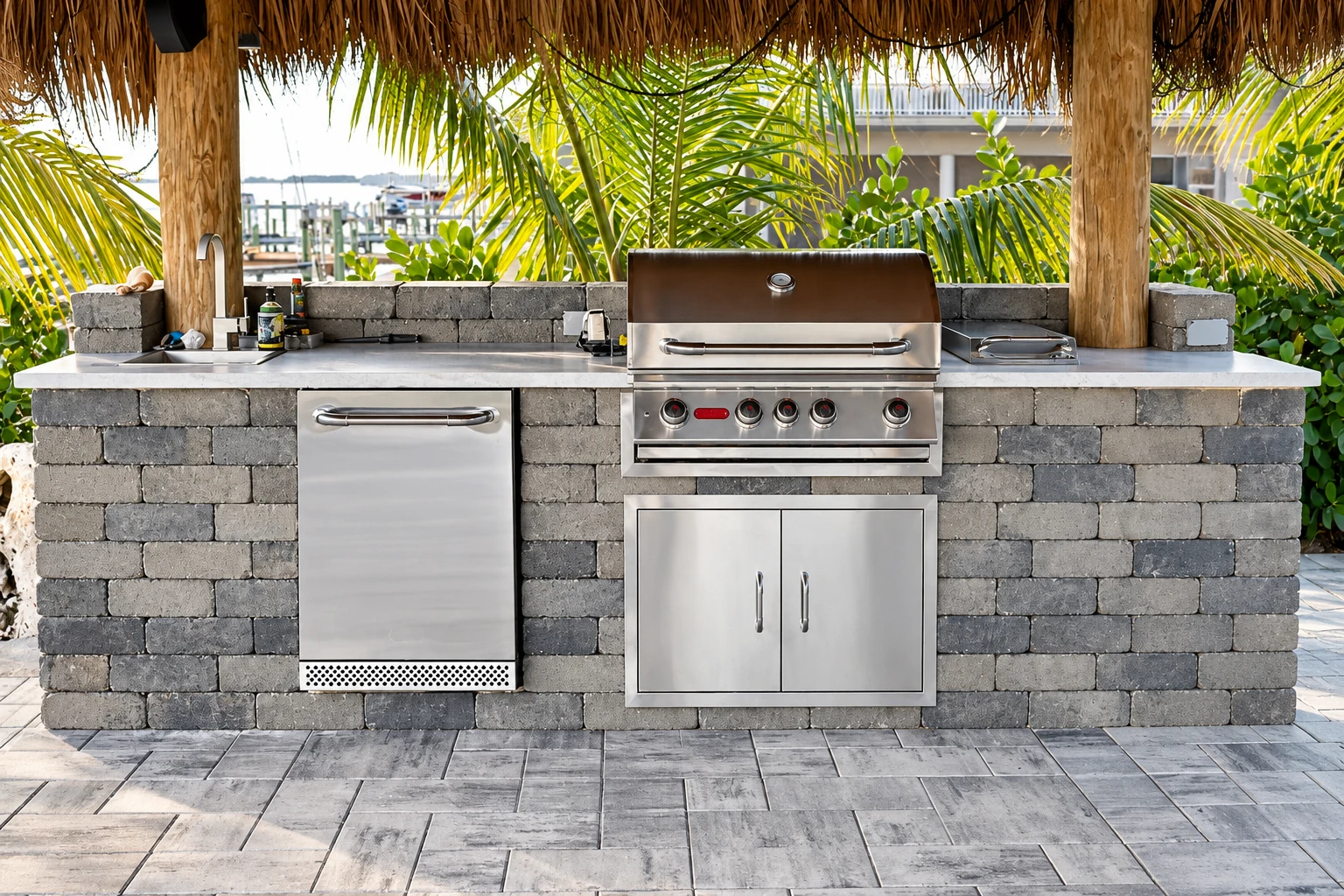
These photos show block and masonry walls of the kind we build, from bare block going up to finished faces. They're here to help you picture the method and finish you might want.
Curved stone edging separates a paved path from white gravel and a dense green hedge.
New driveway paved with rectangular tan, gray, and brown pavers in a staggered pattern.
Stone outdoor fireplace burning beneath a covered patio, with string lights and seating around it at night.
White slatted pergola covers a patio with dining furniture, viewed from below beside a stone retaining wall.
Rough-cut stone porch columns and a low garden wall surround steps, flowering plants, and a covered patio.
A paved patio at dusk has an umbrella-covered table and cushioned chairs beneath glowing string lights.
Get a written scope for your block wall
Send the form or call (610) 424-2415, and we'll reply within one business day to set up a free estimate at your property. I'll walk the site with you, and there's no obligation.
(610) 424-2415Questions Allentown homeowners ask about block walls
These are the questions I hear most when someone in Allentown is planning a block wall. If yours isn't here, ask me when I come out and I'll walk you through it.
How much does a concrete block wall cost per square foot?
Concrete block wall installation across the US usually costs about $16 to $19 per square foot. That's a national figure for the installed wall, not an Allentown price or ours, so treat it as a starting point. Your own number depends on the wall's size, how it's built, whether it holds back soil and how easy the site is to work.
Where do I apply for a building permit in Allentown, PA?
Allentown takes permit applications at City Hall, 435 Hamilton St, 4th Floor, or online through the city's Citizen Self Service Portal. The same office handles inspections once work is underway.
Can a concrete block wall be built in cold weather in Allentown?
Yes, with protection. The Mason Contractors Association of America recommends cold-weather protection when temperatures are forecast to drop below 40°F or the blocks themselves are at 40°F or lower. The group also advises laying block only on a sound, unfrozen base, because snow or ice underneath can let the wall shift when it thaws and leaves very little mortar bond.
How do I keep a new block wall from cracking and leaking?
Control joints and horizontal reinforcement do most of the work. Control joints are planned breaks placed where shrinkage stress is likely to build past what the block can take, and reinforcement running along the wall adds resistance to shrinkage cracking. Shrinkage cracks left alone can let wind-driven rain in through hairline gaps, so ask any contractor where their bid puts the control joints. Our work is satisfaction guaranteed.
How do I check if my Allentown property is in a sinkhole area?
Look it up in the state's Lehigh County sinkhole maps, which mark carbonate bedrock areas with a reported history of sinkholes and areas that may be prone to them. It's worth checking before you plan a wall, and if your lot falls in a mapped area, tell me when I come out so we plan with that in mind.
What do I need ready for a block wall estimate in Allentown?
Have the wall's rough length and height, what it's for and a few photos of the spot ready. Call (610) 424-2415 or use the form above, and I'll go over those with you when I come out to walk the site.
Concrete block walls in Allentown and nearby cities
Allentown's Bureau of Building Standards and Safety handles permits, and its permit list doesn't name block walls, so we check with the bureau before work starts and file if one's needed. We build them across Allentown and nearby cities.